
LIV Golf’s $1M ‘Stinger GC’ Lesson: Clear Your Name Before You Launch
LIV Golf’s $1M ‘Stinger GC’ Lesson: Clear Your Name Before You Launch
By Brad Harrigan, Harrigan IP
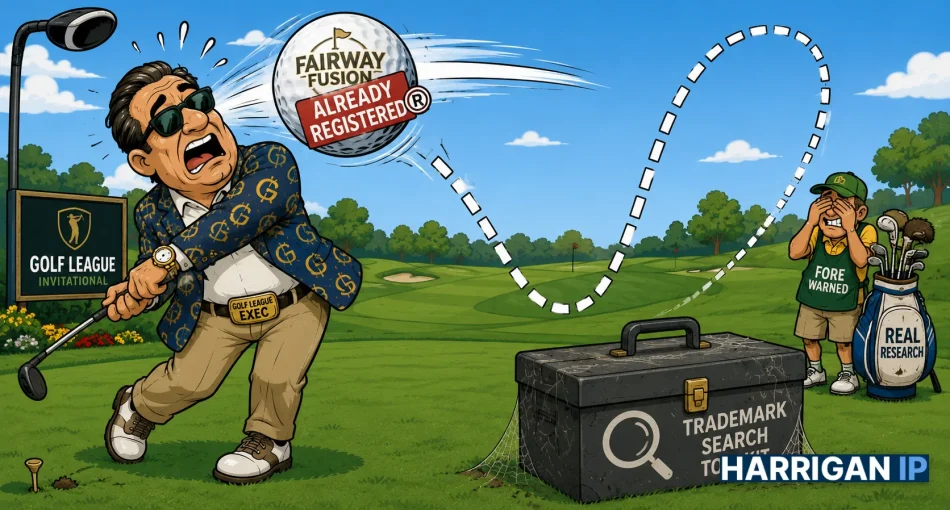
LIV Golf just agreed to pay $1 million to settle a trademark lawsuit over a name it used for one of its teams. The other side wasn’t a rival golf league or a media giant. It was an Ohio company that makes golf tees. This is the kind of story that should make every business owner think twice before printing merchandise for a new brand — because the fix here is a trademark clearance search, and it costs a tiny fraction of a million dollars.
A trademark clearance search is simply checking, before you commit to a name, whether someone else is already using something confusingly similar for related goods or services. Skip it, and you can build an entire brand on top of a legal landmine. LIV appears to have found that out the expensive way.
What Actually Happened
According to reporting from Front Office Sports, Stinger Golf — a golf-tee manufacturer founded in 1998 that says it produces more than 20 million tees a year — sued LIV on June 2, 2025, in Florida federal court, originally seeking $100 million. The dispute centered on a LIV team then known as Stinger Golf Club, one of the original four-man teams when the league launched in 2022.
Stinger Golf accepted LIV’s offer of $1 million to close the case, per a July 6 filing in the U.S. District Court for the Southern District of Florida. The money is due in two payments: $200,000 shortly after acceptance, and $800,000 on September 18. Only LIV and the team it owns are on the hook.
The lawsuit alleged that LIV used the Stinger name on the team and related merchandise despite the tee company’s existing trademarks. And here’s a detail that matters a lot: several LIV applications for “Stinger GC” marks were ultimately abandoned. When your own trademark applications don’t survive, that’s often a sign the name was a problem from the start.
Two Golf Companies, Same Word
You might ask how a golf-tee maker and a professional golf team could ever be confused. That’s exactly the analysis courts run in an infringement case, and it isn’t about identical products — it’s about whether consumers might reasonably believe the two came from the same source or were connected.
Both operate in golf. Both use the word “Stinger.” The tee company’s logo features a flying insect resembling a bee or hornet — a natural fit for the name. When two brands share a distinctive word in the same industry and sell merchandise to overlapping customers, that overlap is where a likelihood of confusion claim lives. Likelihood of confusion is the core test for trademark infringement, and proximity in the marketplace is one of the biggest factors in it.
This is why picking a name that’s already taken in your field is such a costly gamble. If you’re unsure how strong a name is before you get attached to it, our guide on choosing a strong trademark is a good place to start.
The Rebrand Came Too Late
LIV did eventually change the name. Stinger Golf Club became Southern Guards GC in January, ahead of the 2026 season — a South African-themed identity captained by 2010 Open champion Louis Oosthuizen, complete with rhino imagery. The team’s general manager framed it as embracing a name that “more authentically reflects who we are and where we come from.”
Here’s the timing problem: the rebrand happened before the court ruled on the tee company’s request to make the team stop using the Stinger name. Changing the name after you’ve already built and sold merchandise under it doesn’t erase the earlier use. It’s like taking your hand out of the cookie jar after you’ve already eaten the cookies — the crumbs are still on the floor. The rebrand may have stopped the bleeding, but it didn’t undo the alleged harm.
Attorneys for Stinger Golf described the settlement as a compromise rather than a full recovery, and said the decision to settle was influenced in part by concerns that LIV could head toward bankruptcy. The report notes LIV brought on corporate restructuring executives and advisors known for bankruptcy work, and that a separate former technology partner recently sued the league for more than $1 million. That backdrop is worth flagging, because it points to a second lesson: a judgment is only as good as the defendant’s ability to pay it.
What This Means If You’re Rebranding
Rebrands are exciting. New logo, new story, new energy. But the excitement is exactly why so many businesses race to announce before anyone checks whether the name is legally clear. LIV is a well-funded operation and it still got caught — a small business has even less room to absorb a seven-figure surprise.
Do the search first. A proper clearance search looks at registered marks, pending applications, and common-law uses in your industry before you spend a dime on signage or inventory. If a conflict shows up, you find out while a name change is cheap — not after you’ve printed a season’s worth of merchandise. Our post on why you should search before you file walks through what that process catches.
Clearing a name is only step one. Once you’ve picked a clean name, registering it gives you the nationwide rights that make it worth defending — and monitoring alerts you when someone else tries to move in on it. Stinger Golf had its trademarks in place, which is a big part of why it had leverage to begin with.
If you learn one thing from a $1 million golf-tee lawsuit, let it be this: the cheapest part of a rebrand is checking whether you’re allowed to use the name.
Planning a new name or a rebrand? Let’s clear it before you commit. Contact Harrigan IP to get started, take a look at our flat-fee Comprehensive registration package with a full clearance search built in, or read what happens if someone infringes your trademark to see why getting the name right matters.
Get startedQuestions? Talk to Harrigan IP
Contct Us
Contact Us Today
"*" indicates required fields
Location
Harrigan IP
8117 Oak Street, Suite 203
New Orleans, LA 70118

Phone
© Copyright 2026 Harrigan IP. All rights reserved.