
Patrick Mahomes and Travis Kelce Learn a Trademark Lesson with 1587 Prime
Patrick Mahomes and Travis Kelce Learn a Trademark Lesson with 1587 Prime
By Brad Harrigan, Harrigan IP
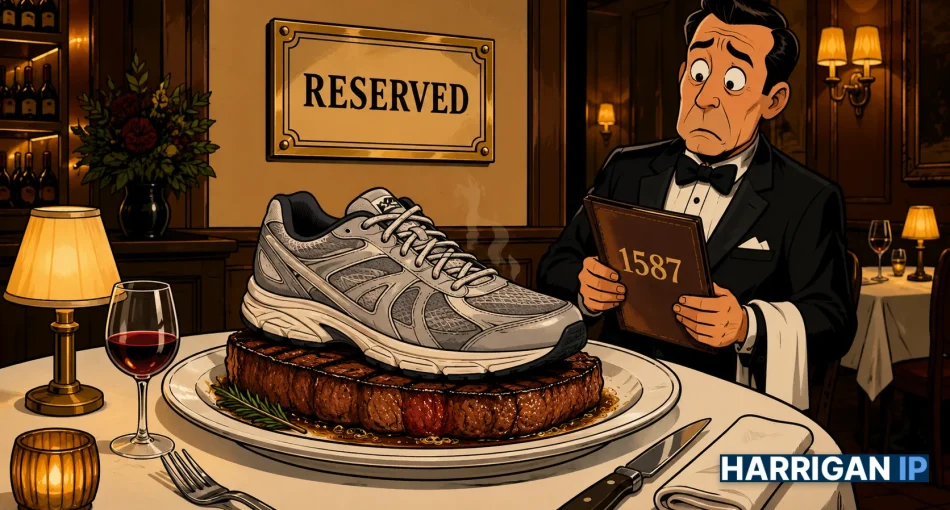
Two Kansas City Chiefs stars just learned that fame does not come with a trademark force field. Patrick Mahomes and Travis Kelce are named defendants in a lawsuit over their steakhouse venture, 1587 Prime, and the case is still very much alive. The plaintiff is a company called 1587 Sneakers, and the whole thing turns on four digits: 1587.
If you run a restaurant, or you are about to open one, this is the kind of story worth reading twice. The 1587 Prime trademark fight is not really about celebrities. It is about a name, a date, and who used it first.
What the 1587 Prime trademark fight is actually about
The number 1587 is a tribute to the two players: Mahomes wears number 15, Kelce wears 87. Blend them and you get 1587, which became the name of the steakhouse. Cute branding. The problem is that another company says it got there first.
According to the reporting, 1587 Sneakers claims it owned the 1587 name before the steakhouse launched. The company says it began using the 1587 name in April 2023 and was selling products before the 1587 Prime trademark application was submitted that December. In trademark law, that timeline matters enormously.
The sneaker brand has sued for trademark infringement, arguing the steakhouse name is likely to confuse the public into thinking the two businesses are connected. Whether that confusion actually exists is a question a court will decide, and the parties will fight over it. But the underlying legal engine here is priority of use.
First to use usually beats first to file
Here is a point that surprises a lot of business owners: in the United States, trademark rights generally flow from actual use in commerce, not from who reaches the filing counter first. If 1587 Sneakers really was using the name in commerce back in April 2023, and the steakhouse application came months later, the sneaker company may hold the senior rights, at least for the goods it sells.
That is why the April-versus-December timeline is doing so much work in the plaintiff’s story. Registration is powerful and worth pursuing, but it does not erase an earlier user’s common-law rights. I have written before about how common-law trademark rights can ambush even a big brand that assumed a federal filing settled everything.
The flip side is that trademark rights are also tied to the goods and services involved. Sneakers and steaks are not the same product. A defendant in a case like this will often argue that consumers would never confuse a shoe brand with a restaurant. That argument can win, but it is fact-specific, and shared branding, overlapping customers, or expansion plans can tip it the other way. This is exactly the sort of question that a proper trademark clearance search is designed to surface before you commit.
The “we’re just the pretty faces” defense
Mahomes and Kelce have asked the court to dismiss the lawsuit. Their argument, as reported, has two parts. First, they say they have no role in managing the restaurant’s business operations. Second, they say they lack sufficient connections to New York, where the case was filed, which is a jurisdiction argument.
The plaintiff is not buying it. In its latest filing, 1587 Sneakers pushes back on the idea that Kelce and Mahomes are, in its words, “two distant celebrities that are mere promotional ‘pretty faces’ of the alleged infringing enterprise with no New York ties.” The company argues the two publicly promoted the restaurant and tied themselves to the business during its launch, and that they should stay in the case as defendants.
That tension is worth sitting with. When you lend your name and face to a brand, you may be doing more than an endorsement. Depending on the facts, you can become linked to the venture in ways that matter legally. We saw a version of this dynamic in the Beastie Boys dispute with Chili’s, where the value of a name and identity was front and center. Every one of these points is contested and will be resolved by the court, not by a headline.
Why this hits home for restaurant owners
You are probably not fielding endorsement deals from tight ends. But the core lesson lands squarely on independent restaurants, cafes, and bars: your name is your most valuable asset, and it is worth almost nothing if someone else already owns it.
Restaurant names are especially prone to collisions. There are only so many appealing words, numbers, and puns, and clever branding often lands close to something already in use. A number like 1587 feels distinctive until you find out someone else built a brand on it first.
The single best time to check is before you sign a lease, print menus, order signage, or buy the domain. Once you have spent money making a name real, the sunk cost makes a rebrand painful, and a cease-and-desist letter arriving after opening night is a brutal way to learn all this. A clearance search and a prompt federal trademark registration turn a guessing game into an informed decision.
It also pays to keep watching after you launch. New applications and new brands appear constantly, and catching a conflict early gives you options that disappear once a competitor is established. That is the entire point of ongoing trademark monitoring, and it is a lot cheaper than litigation in New York.
Where the case stands
One of the co-founders of the sneaker company, Adam King, has signaled that settlement is on the table. He said, “From the onset, we have communicated a sincere belief that there is room for mutual respect and understanding. That belief has not changed, and we continue to hope to resolve this matter amicably.”
Many of these disputes do end in a negotiated deal rather than a verdict, sometimes through a coexistence agreement that carves out who can use what and where. Whether that happens here is anyone’s guess, and the allegations remain allegations until a court says otherwise.
For now, the takeaway is simple. A famous name got you attention, not immunity.
Opening a restaurant or launching a new brand? Clear the name first. Contact Harrigan IP to talk through your name before you sign a lease, or start with our flat-fee Comprehensive registration package that includes a clearance search. Want to understand the risk that sank 1587 Prime into court? Read our guide on why a real trademark search comes first.
Get startedQuestions? Talk to Harrigan IP
Contct Us
Contact Us Today
"*" indicates required fields
Location
Harrigan IP
8117 Oak Street, Suite 203
New Orleans, LA 70118

Phone
© Copyright 2026 Harrigan IP. All rights reserved.