
Epic Systems v. Epic Staffing: A Healthcare Firm Loses Its Own Name
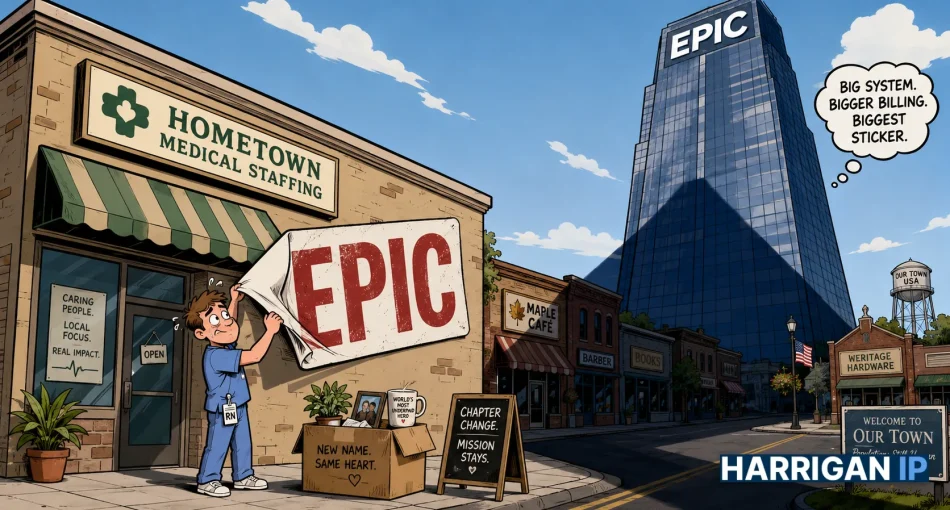
Epic Systems v. Epic Staffing: A Healthcare Firm Loses Its Own Name
By Brad Harrigan, Harrigan IP
A California healthcare staffing company spent years building a brand, then agreed to erase it. That’s the short version of a trademark lawsuit brought by Epic Systems, the Wisconsin-based company best known as America’s largest electronic health record (EHR) vendor, against a much smaller staffing firm called Epic Staffing.
According to reporting from HealthExec, the case settled out of court, with a formal resolution filed in May 2026. The result: the staffing firm agreed to rebrand. For any small business owner who picked a name and ran with it, this one should land like a cold splash of water.
What actually happened in this trademark lawsuit
Epic Systems was founded in 1979 and sells software that hospitals and health systems use to manage patient records. Epic Staffing, by contrast, had been in business since 2017, supplying temporary clinical workers and support technology to healthcare employers.
For its first several years, the staffing firm apparently flew under the radar. Then, starting in 2022, it adopted what the lawsuit called an “Epic formative” naming scheme across its divisions: Epic Travel Staffing, Epic Specialty Staffing, Epic Physician Staffing, Epic Special Education Staffing, and more. That’s a lot of Epics in one industry.
Epic Systems filed its complaint in October 2024, arguing that the staffing firm was infringing on its “Epic Marks” and creating confusion in the market. The EHR company alleged that hospitals and health systems might believe the younger firm was a subsidiary of the “true” Epic. It asked a court to order a name change and to award damages, claiming its brand had been tarnished.
Why “we’re in a different business” didn’t save them
Epic Staffing initially pushed back hard. In 2024 it vowed to take the case to trial, called any suggestion of market confusion “baseless,” and argued its name was clearly distinct from the EHR product.
Here’s the legal reality behind that fight. Trademark infringement turns on something called likelihood of confusion — whether ordinary buyers are likely to think two products or services come from the same source. Identical or near-identical names are only part of the test. Courts also weigh whether the businesses operate in the same space, sell to the same customers, and travel in the same channels.
That’s where the staffing firm’s position got shaky. Both companies serve hospitals and health systems. Both, per the source, even have operations in Wisconsin — the staffing firm conducts some clinical talent placement there, in Epic Systems’ backyard. When two companies share the same customers in the same industry under the same word, “we do different things” is a tough sell to a judge. The lesson for your business is simple: confusion is judged by your customers’ eyes, not by how clearly you see the difference. We dig into this more in our guide to what happens if someone infringes your trademark.
The settlement, and the parts we still don’t know
Less than two years after the complaint, the parties settled. In statements sent to media outlets, both companies described the staffing firm’s decision to rebrand as “amicable.” Whether any damages changed hands is not public — the full settlement terms were kept confidential, which is typical.
The timeline for the actual name change isn’t clear either. As of the reporting, the staffing firm’s website still advertised its Epic-formative solutions. Rebrands take time, but make no mistake: the company agreed to give up the name it had been using and marketing for years. Picking a new name, updating a website, reprinting everything, and rebuilding search rankings is not free, even when the lawyers shake hands politely.
Why first-in-time and clearance matter more than gut feeling
Trademark rights in the U.S. generally flow to whoever used or registered a mark first for particular goods or services. Epic Systems has been around since 1979. By the time the staffing firm leaned fully into the Epic-formative branding in 2022, the older company had decades of priority and brand recognition in healthcare.
That’s the trap a lot of small businesses fall into. You search the web, you don’t see your exact name on a competitor’s door, and you assume you’re clear. But a real trademark clearance search looks at federal registrations, pending applications, common-law uses, and — critically — similar marks in related industries, not just identical ones. A quick check before launch is far cheaper than a rebrand after a lawsuit. We make the case for doing it up front in why you should search before you file.
It’s also worth remembering that bigger, established brands often watch the trademark register for new filings that brush up against their names. A strong, well-known mark gets defended aggressively, and a company with Epic Systems’ history has both the motive and the resources to do it. If your proposed name lives near a giant in your field, expect that giant to notice.
What this means for your business
You don’t have to be in healthcare for this to apply. The pattern repeats across industries: a small company adopts a name that’s close to a larger player’s mark in a related space, builds real value into it, and then has to abandon it under legal pressure. Choosing a strong, distinctive name from the start — and clearing it before you spend a dime on signage — is the cheapest insurance you’ll ever buy.
If you’re already in business under a name you never cleared, two moves help. First, get a clearance opinion now, before you invest more in the brand. Second, if you do clear and file, consider monitoring so you learn early when someone files something close to your mark — and so you’re the company with priority, not the one peeling its name off the door.
Worried your business name might be sitting on someone else’s trademark? Get in touch with Harrigan IP for a straight answer. When you’re ready to lock in your brand, our flat-fee Comprehensive registration package includes the clearance work that helps you avoid an Epic-sized headache. And if you want to understand how watching the register protects your name, start with our explainer on what a trademark monitoring service does.
Get startedQuestions? Talk to Harrigan IP
Contct Us
Contact Us Today
"*" indicates required fields
Location
Harrigan IP
8117 Oak Street, Suite 203
New Orleans, LA 70118

Phone
© Copyright 2026 Harrigan IP. All rights reserved.